Posted: November 25th, 2012 | Author: Darren Chartier | Filed under: travel | Tags: backwaters, cochin, india, kerala, rant | No Comments »
With less than 3 weeks to go before I get on a plane and begin the 20 something hour journey from Mumbai to Toronto via London I decided that no matter how much I was enjoying Varkala I had better begin moving up the coast as per my plan if I didn’t want to have a mad scramble for my flight. Today I took a train, sitting in the regular sleeper class (the class below 3rd class) for about 3 hours to arrive at Kochi.
If there’s one thing about travelling that I find really annoying it’s the tediousness of the act of moving yourself and all your shit from one place to another. There’s a whole song and dance of figuring out which bus/train/plane to take, how much it will cost, how long it will take, how comfortable it will be, etc. The situation is not improved by the general lack of online booking, or online presence of any type, of most of the budget accommodation (at least here in the south of India) meaning you either book by phone at the same 10 guesthouses listed in every guidebook and/or tripadvisor, or you show up and lug your backpack around until you find a decent place. Long story short, I had a sweaty afternoon trying to find a reasonably clean, reasonably priced guesthouse.
And then I found twenty bucks.*
Kerala Backwaters
A visit to the backwaters of Kerala is one of those “must do” trips in all the guidebooks and literature about the region. There’s all sorts of romanticism about the system of rivers, canals, lakes, and marshy water that has been used to move spices and people around the region for god knows how long. After reading about it a bit I was a little bit leery of visiting the backwaters as I am travelling alone and it really seems like a romantic couple thing to do. I compromised by doing a group day-trip organized through my guesthouse in Cochin.
After driving for an hour and a half or so we were led to a small “houseboat” made of palm trees, coconut rope, and not much else. The day pretty much consisted of sitting in a lounger chair made of wicker and watching the world go by. There were two stops (other than lunch), one bizarrely to see how sea-shells are turned into calcium peroxide (IIRC), and then we stopped off at a place where we could watch coconut rope being made, starting with coconut husks that are soaked, the fibres then separated, and finally twisted and spun either by hand or with machine resulting in very coarse but surprisingly strong rope.
The highlight of the trip for me was the lunch, a spicy southern Indian vegetarian thali served on a banana leaf.
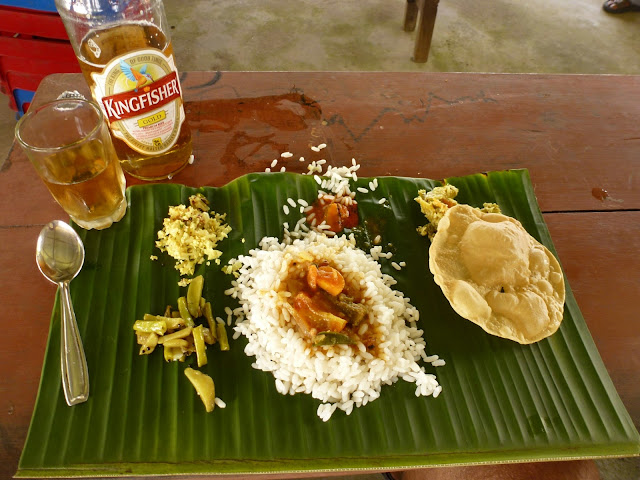
click the photo for full album
Overall I’m glad I only did the day trip, the backwaters are beautiful but really repetitive, with palm tree after palm tree everywhere you look. I imagine on a more fancy houseboat (they exist, I saw the flyer, some even have actual cabins!) with @pipesdreams and some friends it would be a great way to spend a day or two and really see a slow view of old Kerala.
Cochin
Cochin is actually a big south indian city, but one which I only really saw a small bit of the old Fort Cochin area which is essentially the old portugese/dutch colonial area of the city. Big old colonial buildings, falling to pieces for the most part, reminded me of Havana in some ways. As previously mentioned I did a whole lot of walking around this area carrying all my gear and my advice to anyone else coming to Cochin is as follows: just go to Burgar street, ignore the many many other guesthouses before there. If you’re lucky, Anthony at the Spice Holidays homestay has a room free, it’ll be clean, cheap, and he’s a super friendly and very nice man. My room ran me 450 rupees and was his cheapest, but he’s got nicer ones for those with bigger budgets. If he’s full up there every second building is a homestay or guesthouse.
Ahem. I didn’t really see much in Cochin, but I did visit the old dutch palace museum which is your standard depressing Indian museum. Exhibits are poorly kept and the placards for the artifacts don’t really tell you much (conversely the placards without any artifact attached seem hell bent on telling you everything, often in very small print), but it’s only 5 rupees entrance (same for foreigners as for Indians, a refreshing change).
One thing that stuck with me given my short stay in Cochin was how many churches there were, not just heritage churches left over from colonial times but active modern christian churches. India maybe 90% hindu but 10% of a billion people means lots of churches, mosques, buddah statues, and synagogues. Speaking of which I also visited Cochin’s “Jew town” which doesn’t really, as far as I understand it, have much of a jewish population any longer as they all up and left for Israel in the fifties. After visiting Jewish areas in europe where there were no more jews, this was a refreshing change and allowed me to explore the area without that nagging feeling of guilt that follows you when visiting the sites of atrocities.
* A phrase I use to denote that I know my story is going nowhere and needs to end.
Posted: November 19th, 2012 | Author: Darren Chartier | Filed under: travel | Tags: kerala, trivandrum, varkala | No Comments »
Trivandrum
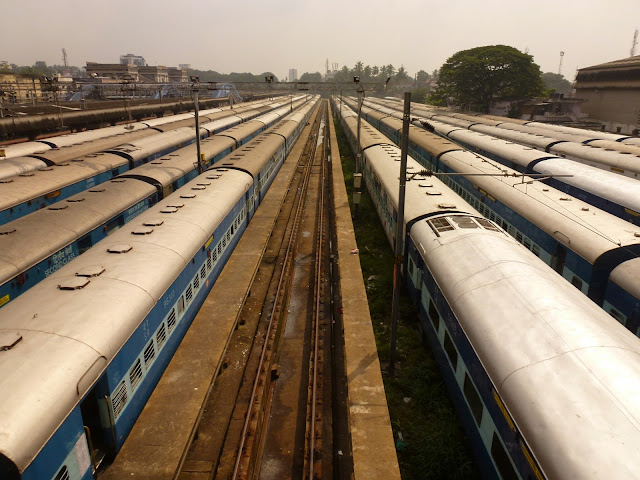
click the photo for full album
Trivandrum isn’t really the name of the capital city of the state of Kerala, but I have no hope in hell of spelling the new name properly. Here I’ll go cut and paste it: Thiruvananthapuram.
Anyways, I arrived in Trivandrum after a long flight from Delhi with an unexpected stop-over in Kochi, I thought it was a direct flight but it was one of those sneaky “we’ll just land here for 30 minutes or so on our way” flights that looks like a direct flight on the internet, lesson learned. It wasn’t until after midnight that I actually made it to my hotel. The drive over was a good intro to the town, it was quiet, the streets were empty, and it even looked reasonably clean, basically paradise after my short sojourn in Delhi.
I gave myself one full day to explore the town before heading off to the beach at Varkala where someone told me there might be surfing (I have been thinking of trying to learn just for fun) but I forgot just how 35C and 90% humidity feels, so I didn’t exactly make it to all the sights available. The coolest sight is unfortunately one I couldn’t go into, the Sree Padmanabhaswamy temple which is notable because not too long ago the decided to open the vaults beneath the temple (vaults that have been storing offerings for centuries) and discovered about $5.82 billion USD worth of gold and jewels, making it one of the richest temples in the world. Closed to non-hindus I did go up to the entrance and took some photos of the grand entry from the street and smiled at the automatic weapon toting army officers who are now guarding the temple.
Varkala
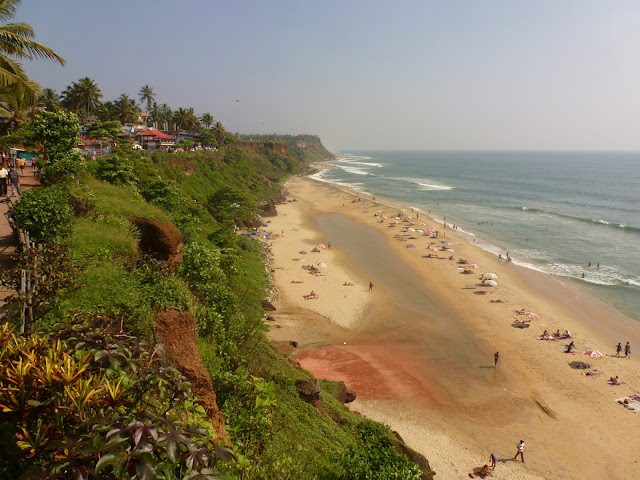
click the photo for full album
Varkala is one of those places where travellers arrive with plans for onward travel and find themselves two weeks later wondering whether they should stay another week. Certainly for me after months of pretty much constant movement, never really staying anywhere for more that 4 nights in a row (well, except Abu Dhabi but that’s one place I really should have given myself less time in with the killer combination of expensive, boring, and hotter than hell), I have already extended my plan to include at least a week here.
What makes it so appealing? First it’s got a beautiful beach backed by a nice tall cliff, meaning all the guesthouses, restaurants, and other assorted crap of tourism stays off the immediate beach. Second there’s a big super touristy beach closer to Trivandrum called Kovalam which draws most of the package holiday types so Varkala is pretty much all travellers. Third, because all the restaurants are essentially on top of a cliff there’s a nice breeze which makes the heat bearable. There are more reasons but they all boil down to it’s a really chill place.
My original reason for coming here was to learn to surf, the water here has waves and most mornings you can see people out on surf boards trying to catch waves, but unfortunately the waves aren’t really great for learning on as they’re unpredictable and choppy at times, or at least that’s what an Australian I met told me. I did find one place outside of town, a full on surf camp/resort, but it’s criminally expensive.
So, I’ve contented myself with learning to body-surf, which is tons of fun and gets me in the water for several hours every day. The daily routine seems to work like this: wake up at maybe 8 or 9am, breakfast, get into the water by 10 – 10:30, play in waves pretending to be a dolphin until noon or 1pm, lunch, back in water for 3’ish for another hour or two, shower and then dinner for around 6 – 7pm, hang out meeting/talking to people at the chill out lounge until maybe midnight. Repeat. It’s a hard life 🙂
Posted: November 13th, 2012 | Author: Darren Chartier | Filed under: travel | Tags: delhi, india | No Comments »
Arrival
The transition from Nepal to India, at least when leaving the Kathmandu airport and arriving in the Delhi International terminal, is a bit of a contrast. In the Kathmandu airport, while I was waiting for boarding using paid wifi to upload some of my photos and writing up my goodbye Nepal blog post, a man fell from the dropped ceiling about 4 feet to my left. Dust, dirt, and who knows what else was in the air, I picked up my things and moved 3 feet further along, and put my Kathmandu pollution facemask on, no biggie.
The Delhi airport is newer than new, it has new airport smell. The long moving walkways take you by bright and shiny adverts for expensive things, and the customs hall is huge and well-staffed. I don’t know if it’s really that new, perhaps it just felt that way after so long in less than modern surroundings, but it was a nice airport.
Strangely my flight actually arrived 20 minutes early, which gave me my first introduction to Indian humour. After passing smoothly through customs and picking up my bag I went looking for a man holding a sign with my name on it. Having been forewarned about chaos getting to your hotel in Delhi I arranged for a pickup in advance. I passed through the big doors after customs, past a bunch of official looking men holding signs for expensive hotels and left the building as I had been directed, where I was met with a second barricade holding back families and more people with less official looking signs. Of course my name was nowhere to be seen. No problem, I had the phone number for my guesthouse, I could call them and find out an ETA and pick a landmark to meet by. I asked the a man at a nearby coffee stand, “Are there any public phones?”, to which the answer was “Inside”. I went to go back in, but a burly Indian man with a big mustache (I don’t think it was for Movember) and a gun told me I couldn’t go back in with my luggage. Hrmm… I suspect that’s a very minor catch-22 by Indian standards.
Around Delhi
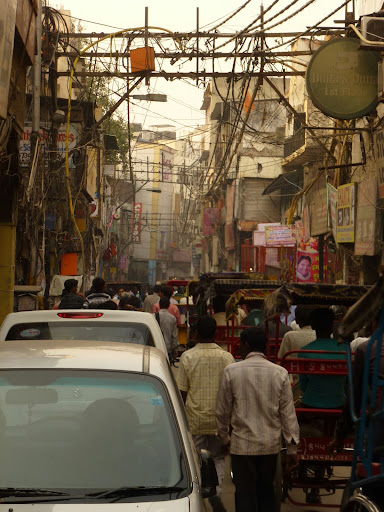
click the photo for full album
Everybody warned me, Delhi and India is crazy busy and chock full of people, and everybody was right, however I think because the warnings were so severe and perhaps as I’ve been to other crazy crowded places like Istanbul and Cairo, it’s not so bad. Even given the huge press of humanity things generally work, traffic is slow but it moves, lines are long but people queue (except when they don’t), and having been to places where there is no (or little effective) government or rules you can tell that laws here are generally enforced.
An example, all the auto-rickshaws run on compressed natural gas. It wasn’t always the case, I don’t know when they all converted but they _all_ converted. I can’t imagine the air quality before the mass conversion, there are zillions of the buggers going every which way in traffic at all times, but I’m sure the conversion removed tonnes of diesel emissions every day. I don’t know how they did it, what combination of carrot and stick was employed, but thankfully they did it.
With only 4 days in Delhi I have decided I don’t have the energy or wherewithall to try and hit all the sights, so I’m taking a random/opportunist approach. My guesthouse is somewhat outside the city centre (in south Delhi) so I’m squeezing myself onto the metro (and it’s a squeeze for men, there are dedicated women’s cars with lots of space, I also imagine they serve tea and play soothing music) and picking stops based on a photocopied tourist map someone gave me and just walking around and seeing what I find.
Impressions
Walking through Chawri Bazaar while about 200000 people crowd the narrow streets around me shopping for Diwali. Hot cauldrons of presumably spicy curry are bubbling and being served up into small paper bowls and scarfed down with the same little spoons they give you for icecream sometimes. I’m too chicken to try it this time, I don’t want actual Delhi Belly so soon into my trip.
Firecrackers, really small thermonuclear devices designed for maximum sonic load, being let off from sunset to after I fall asleep, another Diwali tradition.
Smiling men, every one of them shorter than me, pressed up against all sides, striking up short broken conversations about how crowded the subway is.
Stunning poverty next to stunning wealth, beggars at the windows of Mercedes.
Posted: November 10th, 2012 | Author: Darren Chartier | Filed under: travel | Tags: kathmandu, kayaking, nepal, photos, trekking | 2 Comments »
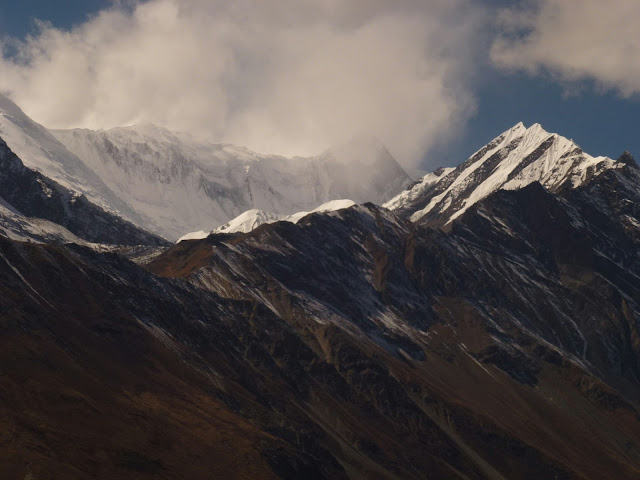
I am sitting in what might be the fourth pre-departure area in the Kathmandu airport, waiting on SpiceJet Flight 046 to Delhi, which will mark the beginning of a month in India. I’ve spent just over a month here in Nepal, a week navigating the bureaucracy of getting an Indian visa, I learned how to kayak in a fast moving river and surprisingly didn’t capsize when going through Class 3 rapids, and I climbed up to where the air is thin well over 5000 meters above sea level.
To anyone thinking about visiting Nepal, I say do it, there’s tons to do and to be honest there’s a part of me that wants to stay and maybe do some mountain biking, or perhaps rafting instead of kayaking, or even to visit the everest region for more trekking.
If you’re thinking of doing the Annapurna Circuit (and I really recommend you put it on your bucket list) I would add to go either sooner, or ten years from now. The reason is that they’re building a road right where substantial portions of the trekking route lies, and I expect that in 5 years they’ll have blacktop road to most of the remote towns which will change their character irreversibly, so go in the next couple years to see the towns before easier access changes them. If you can’t, then wait even longer for them to establish new trekking trails, otherwise your trek will be for substantial portions on a road. I’m pretty confident once the road is in they’ll prioritize new footpaths, there’s too much money at stake from the tourism to do otherwise.
click the photo for full album
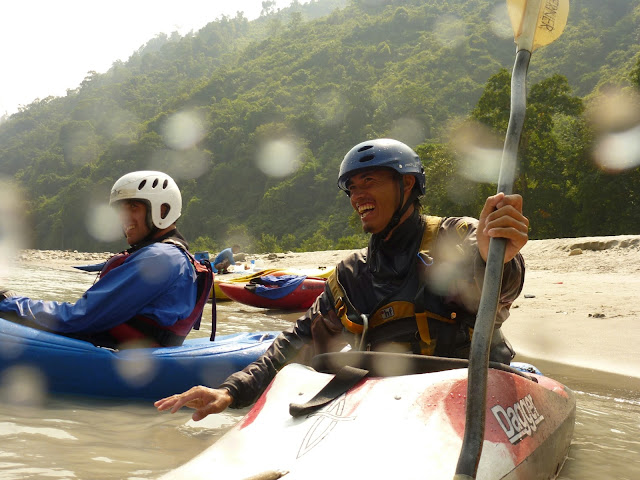
Oh, and a wholehearted recommendation for Paddle Nepal, they were a great outfit and I had an awesome time (once I could consistently figure out how to get my kayak to go in a straight line) going through progressively difficult rapids on the lower seti river.
click the photo for full album
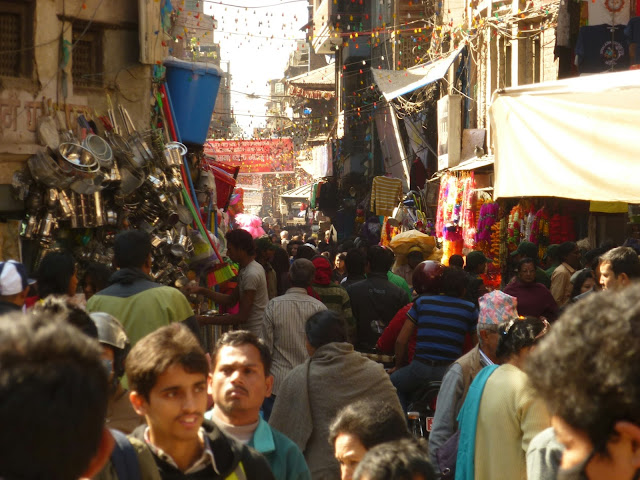
Finally even though I hated the pollution and noise of Kathmandu, a big shout out to the walking tours in the Lonely Planet. I’ve had mixed experiences with these walking tours before, but this one was gold. It really revealed all the quiet spots that lurk hidden within the chaos of the city, sometimes it’s as simple as stooping down through a low doorway and all of a sudden you’re in an oasis of peace and quite with a giant stuppa covered with prayer flags.
click the photo for full album
Recent Comments